

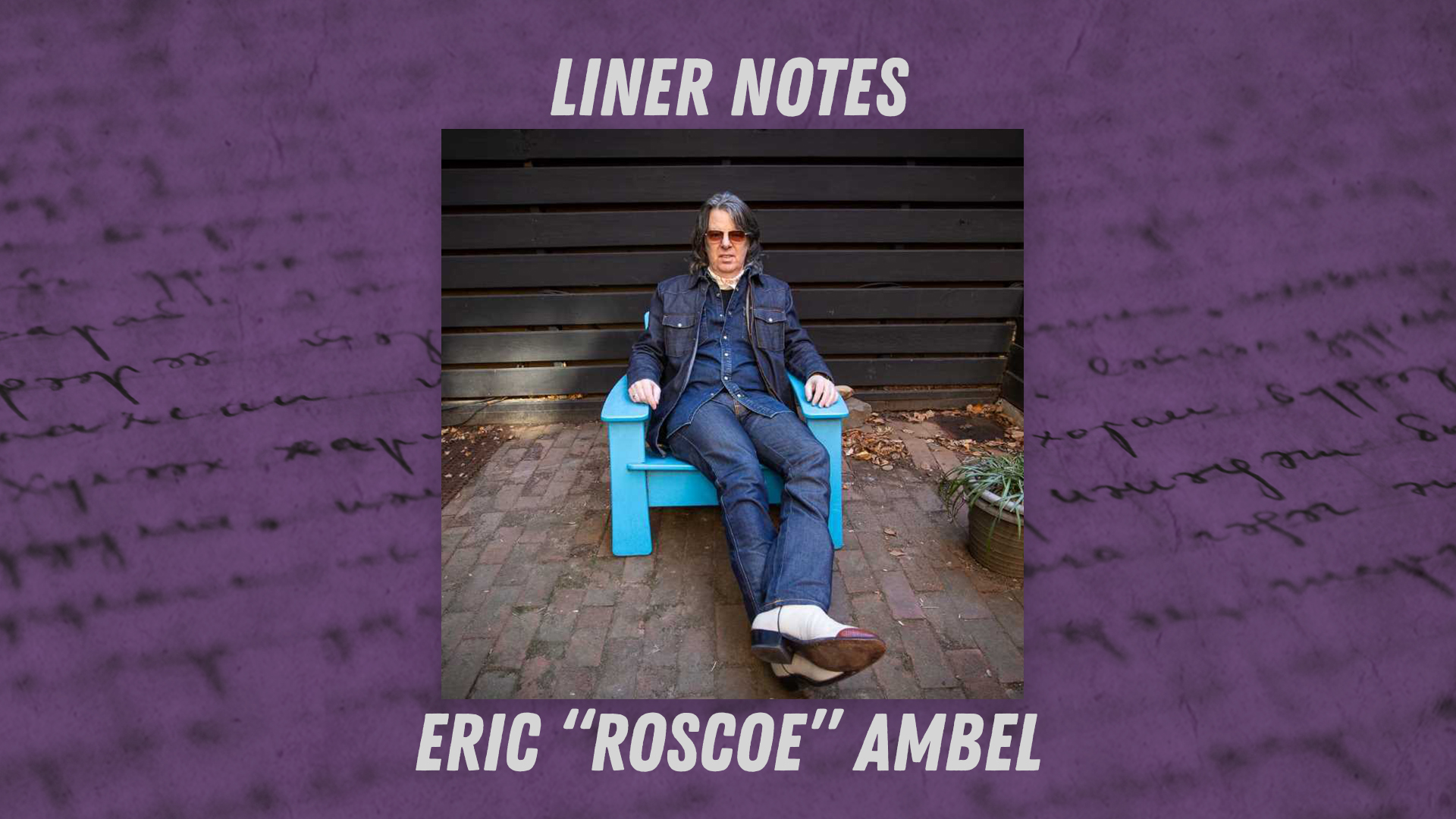
The phrase "roots-rock supergroup" isn't uttered as often as it should be, but it certainly applies to the Yayhoos. Comprised of Eric "Roscoe" Ambel (Joan Jett, the Del-Lords, Steve Earle), Terry Anderson (the Fabulous Knobs, Don Dixon), Dan Baird (ex-Georgia Satellites), and Keith Christopher (Todd Snider, Paul Westerberg), the band fell together almost accidentally in the '90s, recording a batch of demos that were eagerly circulated among the cognoscenti before being issued by Bloodshot Records as Fear Not the Obvious in 2001. Five years later, they returned with the equally outstanding Put the Hammer Down.
Like a lot of supergroups, the Yayhoos were probably never meant to be long-lived — there was always a lot of physical distance to contend with, not to mention a bunch of busy schedules — but the band members still take the stage together on occasion, and both albums still sound just as fresh as they did when they were released. Now, thanks to a pair of delightfully surprising vinyl reissues, fans can hear them in all the analog glory that befits the band's raw rock 'n' roll aesthetic.
To celebrate this happy occasion, Harmonic sat down with Ambel for a conversation about the Yayhoos' origin story, the making of both albums, the process of bringing them to vinyl for the first time, and his impressive career in general. Visit Eric's official site here and check out those Yayhoos reissues right here.
I had forgotten how much fun these records are. At first I was a little surprised to hear they were being reissued, but then I went back to the well, and man, they're great. Did revisiting them light you up at all? Did they do anything for you?
Yeah, they're cool and they're different, but they hang together. The recording situations couldn't have been more different. The first record was not intended to be in a record in any way. It was a songwriting session, and at a certain point, we got tired of making copies for our friends, and we were lucky enough to have Bloodshot be interested in putting it out.
The story starts with Howard Thompson, who was with Elektra Records at the time, giving you $5,000 to make a demo that you've said you knew wouldn't lead to a contract.
Well, my partner in the Lakeside Lounge, Jim Marshall, also known as the Hound, was managing a band at the time called the Pristines. And Howard was really hot on the Pristines, And so the five grand that we got was just sort of throwing us a bone. I knew he was… it all worked out. It all worked out. But I didn't think that we were gonna get a major label record deal out of it. That's why we took the money for the songwriting time instead of blowing it on a three-song pro recording in a studio.
I love that that was your thought — "I'm not going to get a contract out of this, so we should get some songs out of it instead." But this was what, '96, '97?
I think, yeah, because the Lakeside opened in '96. I think it was right around the time that the Lakeside opened.
At this point, Dan is a year or two removed from his deal with American Recordings. It seems like there would still be some kind of market for what you guys were offering. How were you so convinced that early on that you would have to do it yourself?
Well, I mean, that's kind of how the band started. Dan lost the support of American, and Jan and Terry helped me write songs for my Loud & Lonesome record, and when we were down there doing that, Dan was like, "Hey, if we had Keith, we'd have a band." And so that was the idea. And then before we started recording these songs, we started sort of touring as a co-op, because me and Terry were both on tiny labels and Dan had lost the support of his label.
We could go out and trade songs and still be a rock band instead of dudes on stools with acoustic guitars, so we went overseas. There was a point when it was Dan Baird and the Yayhoos, just because he had more juice, and we never lived in the same city. When it made sense to do it, we would do it.
The European thing was always kind of interesting to me, especially during what ended up being later in Dan's solo career, when Europe was really it. It was like you guys were jazz musicians in the '60s — sort of obscure at home, but given a hero's welcome overseas.
Well, yeah, there's a certain kind of respect. In America, a musician is a guy without a job, and over there, we're American artists. Here, we get a pizza; there, they take us to the best restaurant in town. It's kind of a given that we're extra good at this, and that's a nice thing. The drives are shorter. Toward the end of the Del-Lords, we started going over there, and it was really good for us, because there was this audience that really wanted to hear this American rock 'n' roll roots-type stuff.
I spent the whole day listening to the Yayhoos records, your records, some of Terry's stuff, some Del-Lords stuff, and I just kept thinking about how the story with this type of band, seemingly forever, has been: People think they're great. A lot of talent, kick-ass songs. Maybe once in a while, you catch a stray bullet as a hit. But by and large, the record industry has been kind of inhospitable to this type of music for almost as long as I can remember, and I can't really fathom why that is.
I guess now, you could kind of make the argument that studio-crafted pop is so entrenched that rock has almost become a novelty, but it wasn't that way in the '90s. It wasn't really that way when the first Yayhoos record came out. It's hard for me to understand why acts like the ones that you've been affiliated with for pretty much your entire career have been treated this way by the industry.
Well, there's so many things that are out of your control that have to come together at the exact same time to have a hit. To be a working musician is its own reward. I like to say you can never screw yourself by doing a great job, and I haven't made any records I'm embarrassed about. I don't think any of them sound dated or anything like that.
The sort of retail equivalent is that they never stop making blue jeans and cowboy boots. They never stop making them. Every once in a while, they really start pushing them. Somebody wears it and boom, it's a big deal again.
Also, for me, with the Del-Lords, coming from a band with multiple singers, that was a big thing. "Conventional wisdom" is a lot like "military intelligence" or something. Who are you talking about? Whose conventional wisdom? Some suits. They're not musicians. And nobody really knows what's gonna work, and the journey is its own reward. Here I am, and I'm still doing it. I have a recording studio, and I'm working with bands all the time, making anywhere from five to eight albums a year for people and helping other people do their thing. It's great.
That's the right perspective. For somebody who's a fan — I mean, I was 12 when "Keep Your Hands to Yourself" came out, so for pretty much my entire formative youth, it was like, "Man, how come the Georgia Satellites didn't sell as many records as the Black Crowes? How come the Del-Lords never were bigger, or the BoDeans weren't bigger?" It's easy to get caught up in that. But you're right. You've had a wonderful career.
And I love what you said about not having any albums that you feel bad about, because you did come up at a time when a lot of things that came out now sound fairly dated, and to emerge from that relatively unscathed — and also to come out of that with the philosophy that a band should be recorded as a band — is, I think, to be applauded.
Yeah, well, thanks. The overdubbed Del-Lords record is… the comparison is a police interrogation, where they catch four kids fucking around and they take them into separate rooms and they see if their stories match up. It's like, "Wow, you saw us play, and we were playing together, and now you want us to play separately? I don't really understand it." But that thing about the dated bit — when I go back to listening to the Del-Lords, we played pretty fucking fast. And that was the thing of the time. I mean, that shit is fast.
Which you must notice when you play it now.
Yeah, I mean like, nowadays when people get together or if you got a gig and you want to learn a new song or something, you can take the song and drop it into Pro Tools and slow it down a little bit so nobody gets it wrong. I can't — I don't want to go that fast.
So the first Yayhoos record just sort of falls together. You go back to Bloodshot, you say, "Hey, the first one made money, you're in the black, how about we get a budget for the second one?" Is that the story?
Yeah. [Label co-founder Nan Warshaw] — and she wouldn't mind me telling this — her response to the number that we threw out from Bullethead, who was our manager and is still, I have to say it, the world's biggest Yayhoos fan. It's important to get that out there. Her response was, "We received your hostage demands." This was coming back on a... on a fax or email or something. It was like, "Okay, I guess we'll have to put it out ourselves." And it was also... There was a little window there where, before streaming was super huge, it was a little easier to get the people that might like your music to buy it directly from you.
I've been doing this for a long time. I did stuff before Joan Jett and the Blackhearts, but that was my entry to really doing it. And I saw that the producer was the one spot that wasn't a youth spot. The record company is not gonna give this big pile of money and responsibility to a 25-year-old kid. And also, I played music before punk rock. I played the trumpet in the band and I took piano lessons starting in third grade and so I had some skills and then Lou Whitney — I learned so much from Lou Whitney — and one of his things was, "Roscoe, sometimes a producer is just a guy who's done it one time before."
I really like the mental image of you sizing up the studio and being like, "Yeah, that's the chair that I could age into. That's where the job security is."
Well, also, when you're in a band, you can only play so much and then you can't go back to that town for a while. And if your whole world is that one band… that's how I got my first solo record. At one point in the Del-Lords, the manager called us in for a meeting and he's like, "The good news is you guys are still on the label. The bad news is they can't put the record out for another six months, so you have to get jobs." So the next day I came in, I was like, "Can I have a meeting with you? I have this idea to make a record and I have some songs," blah blah blah. And the guy was like, "Go home and write that up on one page. If you can make it specific enough that it's one page, then I can sell it to somebody." And then he turned around and got me a record deal and that's how I did the Roscoe's Gang album. So all of sudden I had another outlet too.
Given that you do put such a premium on that type of no-frills, guys in a room approach, do you think that there's anything lost between the almost accidental nature of the first Yayhoos album compared to the more planned approach you took with the second one?
Not really, because, well, that's a testament to those guys. Everybody really helped each other. Of course, when you listen to those songs, maybe somebody brought in the first part, or maybe one guy wrote the whole song, and then it's his song, but everybody would really help.
And that's the thing about the Yayhoos that, to me, is different than other bands I've been in. I just never had a situation where everybody really helped the other guy. Or they had an idea for "If we do this, then you can do that." Everybody seemed to be thinking in the same direction, and how we could go further. Sometimes I referred to the gig as like a relay race, because when you got four guys like that in a band and each one of them could carry the thing, you push harder than you would on your own, where you had to be singing all night. You push hard and then you hand off the baton and then Terry, he's gonna push hard. And Dan may be smoking, but he's also resting up for when he gets the baton and he's gonna push hard too. And Keith, who knows what'll happen when he gets it?
It feels to me like the platonic ideal of a band, and something that you wouldn't want to give up.
Well, when the Del-Lords were on tour with Lou Reed in the '80s, he had a super pro band and we did the whole country. We were younger, and we're complaining about this and that because we're trying to be better every single day. And those guys were already semi-jaded professionals, and they were like, "You may not get to be in a band like this again."
And we had all seen that in the Yayhoos, so when we got to have even a little piece of it, we knew it was special.
You're describing that relay race and I'm thinking, "Man, I would never want to give that up." But you're saying you already knew that it could, and probably would be, fleeting. And so it was okay.
Yeah. Yeah, yeah, yeah.
And I'm guessing these reissues have not left you feeling like there's any unfinished business there.
I don't know. Both times when we did it, and when we've had the opportunity to play together since, it just really depends on the fact that these are four different guys all over the country, and we're older. Some people can't get in the van, some people don't wanna get in the van. We did play on the Outlaw Cruise a few years ago, and that was a good time. I mean, that's a different kind of situation, because it's just really nice, and they have good equipment, and you're not having to load in, and you're not going to have to play a couple gigs on nights that are slow everywhere in America to get to a place where it's a good night in America.
I mean, to me, I just never thought that we'd have these vinyl copies of the albums. There's technical things, too — they're pretty long. They're records from the CD era. And people cutting vinyl have gotten better at doing these long cuts than they were 10 or 25 years ago. When I first thought that we were going to try to put it on vinyl, I thought that we'd have to have it be three discs or something. I forget how long the records are, but I think one of them is 48 minutes or something, and it sounds great to me. I mean, back in the day, a lot of people didn't know why so many artists had that acoustic song on the last song on side A. It's because the grooves are tighter together, and you can't be banging it there.
I really couldn't believe that we got them out.
How involved were you in that side of things with these reissues?
I was really lucky. I've had this recording studio, Cowboy Technical, with Tim Hatfield since about 1999. We're in our third location. Analog tapes are really cumbersome and they have to be stored a certain way. And, back in the day, if a band that was on a major label, after you made the record, the tapes went to them, and they were cataloged and stored somewhere. But all these bands that are on indie labels, I mean, nobody was sending their master tapes to Bloodshot to store them. That ended up being my responsibility, and I was really lucky that I could find the two-track stereotypes for both albums. I was really excited about that. There's a lot of reissues out there whose sources may not be as awesome as ours are.
And how do you feel about the format itself? I don't know if I buy into vinyl actually sounding that much better than everything else, but what I do really like about it is that I'm engaging with this thing. I'm holding it. I'm putting it on the turntable. I have to stay nearby because otherwise it's just going to get to the end of the side and skip forever. It forces you to really spend time with the music.
Yeah, there's definitely more ceremony to it. You don't have anybody changing the sequence of the record to their own sequence, or skipping a song. That rhythm of putting the record on for 18 to 23 minutes, and then going over there and flipping it over, and you're looking at the album cover — there's so many things as a kid, like "Who's McKinley Morganfield? I gotta find out who that is. Who's Chester Burnett?" I guess you can look those things up on Google, but yeah, the whole format of the vinyl is really something.
I mean, I gotta hold up my hand and say I didn't own a turntable for probably 15 years. And then one of my clients, Eric Huey, bought me one as a present. And there are funny statistics out there, too. Something like a third of all vinyl purchases never get opened. But the passionate listener has always been our listener, so it's great that we could give them this thing.